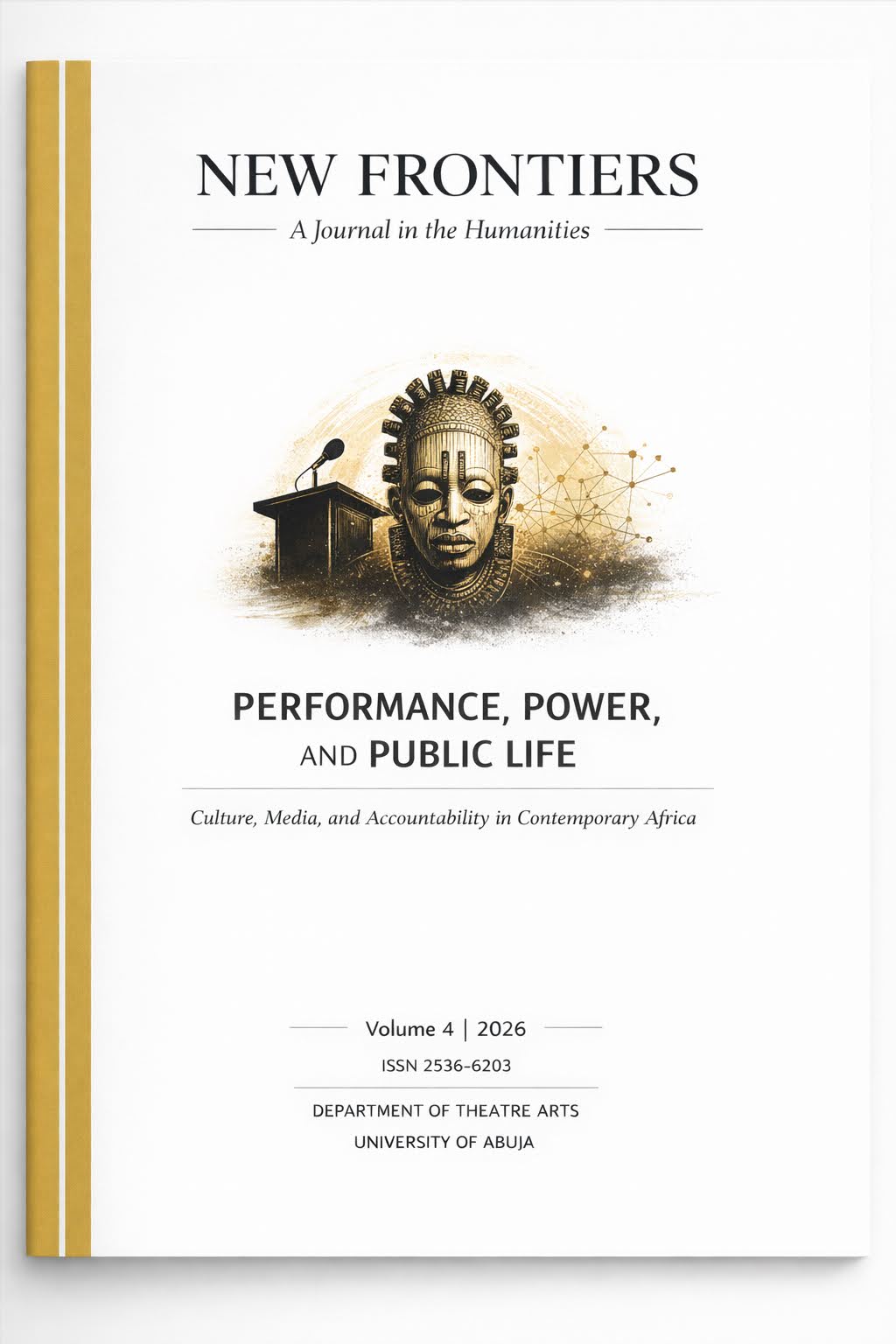
Development of Traditional Theatre Forms in Okunland, Kogi State, Nigeria (1900–1950)
Keywords:
Development, Tradition, Theatre Forms, Okunland, New HistoricismAbstract
The cultural and traditional essence of Okun societies is deeply enriched by the development of diverse theatre forms that mirror the people’s collective consciousness and historical identity. These forms express socio-cultural behaviours that foster social cohesion, moral regeneration, and intercommunal dialogue within the Okun geopolitical landscape. This study explores the evolution of traditional theatre forms in Okunland, Kogi State, Nigeria, from 1900 to 1950, employing descriptive and historical research methods. Primary data were derived through interviews conducted with informed consent to ensure ethical compliance, while secondary materials were drawn from relevant texts, dissertations, and archival resources. Relevant scholarly works and histories associated with developing theatre forms in Okunland are also explored. The study adopts Stephen Greenblatt’s theory of New Historicism as its theoretical framework, allowing for the interpretation of theatre as a cultural text shaped by the dynamics of history and power. Findings reveal that Okun traditional theatre forms – including folkloric performances, Oro theatre, Epa masquerades, Iregun chants, and Agado dance – serve as living repositories of the people’s social memory and moral order. Reviving these traditions reflects the community's cultural identity, while documentation and education can help gain recognition beyond Nigeria. The study concludes that the development of traditional theatre forms in Okunland demonstrated the richness of the people’s cultural identity. It recommends and also offers a framework for artistic education, heritage tourism, and intercultural dialogue.
Downloads
Downloads
Published
Issue
Section
License
Copyright (c) 2026 Femi Yinka Atteh (Author)

This work is licensed under a Creative Commons Attribution 4.0 International License.